

I was part of the process problem
When we sat down to fix how our newsletters get made, I assumed the problem was the tools. Some of it was. But the first gap we found had my name on it.
Every LORE and SOI newsletter we produce is custom to the client's story and market. Before anything goes out, someone has to say "yes, this is ready." For years, that someone was informally me. If I saw a draft, I reviewed it. If I was busy, it sometimes went out without that final look. There was no defined approver and no defined step, just a founder who was usually around.
That is not a process. That is a habit, and habits do not scale.
What we found when we measured
We timed a full newsletter cycle with the team, start to finish. At full service, our newsletters take about 154 team hours a month. That is close to one full time person doing nothing but newsletters.
The writing was not the problem. The handoffs were. Each newsletter passed through five tools, and every handoff was done by hand:
Status was retyped into a separate tracker the team did not use consistently.
Delivery steps were different for every client platform, so steps got missed.
A VA pulled opens and clicks from each platform, typed them into a form, and then the results were copied again into reports.
The dashboard that was supposed to show results across all our clients had stopped working.
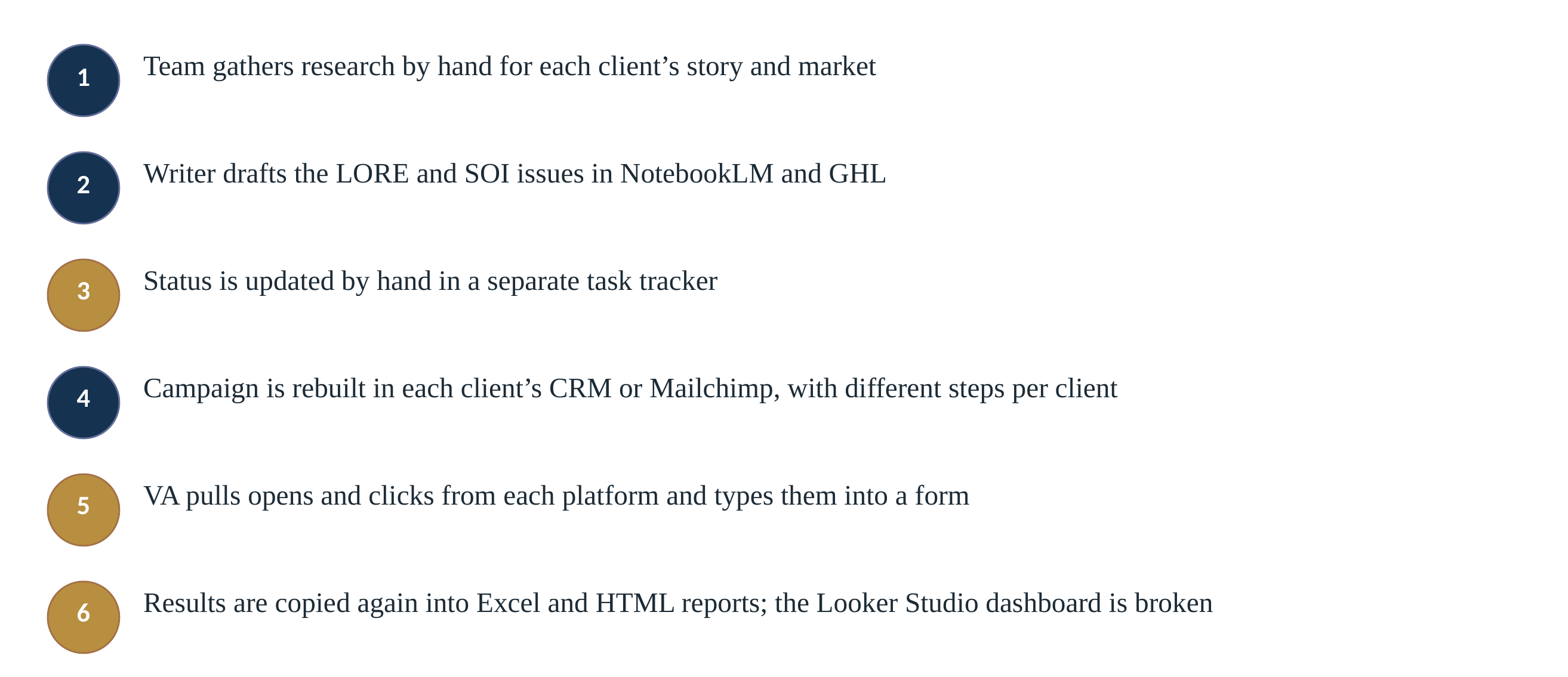
How a newsletter moved before the redesign. The gold steps are where the same information was typed into a second or third place.
Skilled people were spending their hours moving information between systems instead of writing and serving clients. Nobody on the team was doing anything wrong. The process was asking them to.
Our team thinks in process
What made this project work was not a new tool. It was a team that already thinks in steps, owners, and handoffs.
Our project leader, Charlton, ran the build in one week cycles and reported progress every Monday. Each phase ended with a sign off before the next one started. That rhythm meant problems surfaced in days, not at the end.
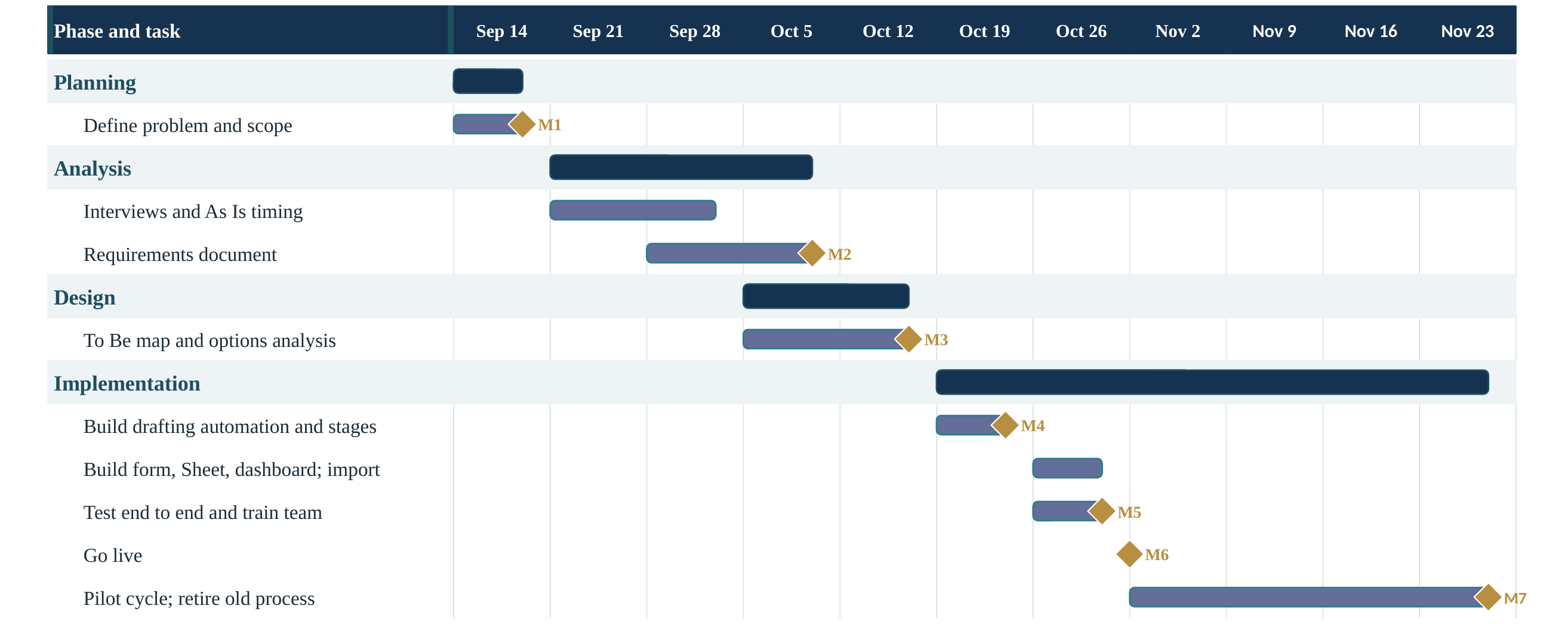
The project plan. Dark bars are phases, lighter bars are tasks, and each gold diamond is a sign off.
The marketing team and our VAs told us exactly where the friction was, because they live in it. They knew which step got skipped, which field was always missing, and which client platform worked differently. That is process thinking. It is noticing the pattern, not just doing the task.
The best example came on October 20, the second day of the build. While rebuilding our client newsletter forms, the team realized a form submission could pull the client's information and create prompts in NotebookLM automatically. Drafting would start from the client's own input instead of from scratch. It was not in the plan. They found it because they were paying attention to the process, not just the checklist.
The founder follows the process too
Here is the part I had to practice. Once we approved the requirements, they were frozen. Any change had to come to me as the sponsor, written up, with a reason.
It would have been easy to skip that when the form idea came up. It was a good idea, and I own the company. Instead, it came through as a change request. I reviewed it, approved it, and it was built and documented like everything else. If I expect the team to follow the process, I have to follow it when it is inconvenient for me.
The same goes for approvals. The informal "Sabrina will look at it" became a defined manager approval step. Every draft is now reviewed, and a rejected draft goes back to the marketing team for revision instead of slipping through. My role is clearer, not bigger. That is a relief for the team and, honestly, for me.
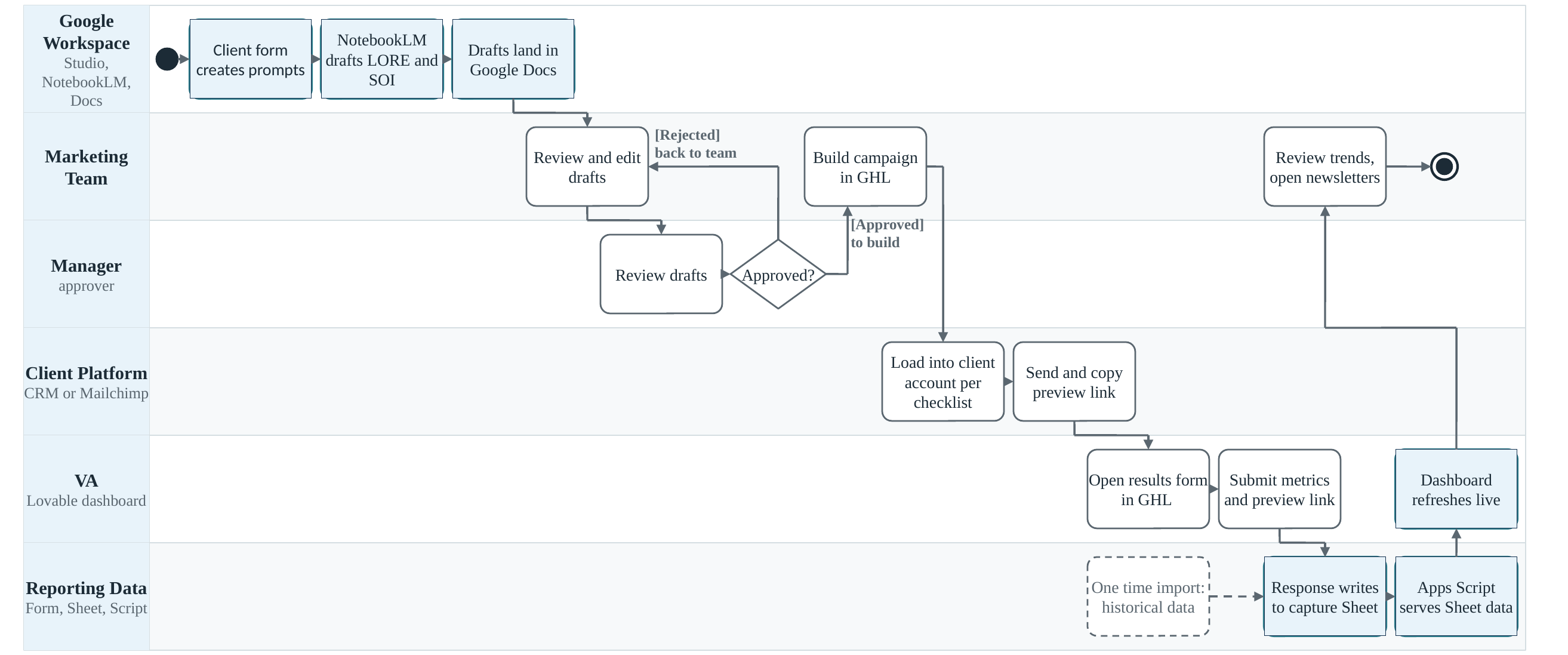
The new workflow, with one lane per owner. Shaded steps run automatically. Rejected drafts go back to the marketing team; approved drafts move forward to the campaign build.
I also had a structured reason to slow down and document all of this. I mapped the workflow as part of a systems analysis course in my graduate business program, and writing the current process down step by step is what exposed the gaps.
What it means for our clients
We connected tools we already pay for: GoHighLevel, Google Workspace, and our Lovable workspace. No new software. Here is what changed:
Every newsletter is still custom. Automation handles research and first drafts. People handle the writing, editing, and judgment.
Every draft gets a final check. Approval has a clear owner now.
Status lives in one place. GoHighLevel pipeline stages track each newsletter from research to sent.
Reporting is live. Our new dashboard went live November 1 with results going back to 2020: 1,680 reports, more than 1.39 million emails, and a 30.5% average open rate.
We have room to grow. We expect to save 35 to 49 team hours a month. That is capacity for 2 to 3 more newsletter clients without adding headcount.
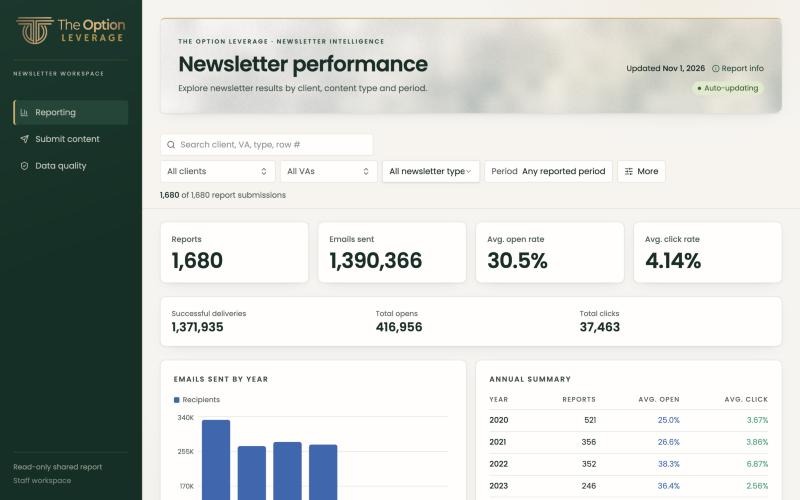
Our live newsletter dashboard, filterable by client, VA, and newsletter type.
That last point matters right now. Many agents cut back on newsletters this year as the market tightened, and requests are picking back up. We want to be ready for that volume without cutting corners on quality.
What I took from it
Process is not paperwork, and it is not something a founder hands down to the team. It is a shared habit of asking: who owns this step, what happens next, and how do we know it worked?
Our team asks those questions every day. This project reminded me to ask them about my own role too.
If you are an agent who wants a newsletter that sounds like you, backed by a team that runs on process, let's talk.